
Floors Built With Finish-Carpentry Precision
Flooring installation in Nashua for subfloor failures, uneven surfaces, and material mismatches in older homes
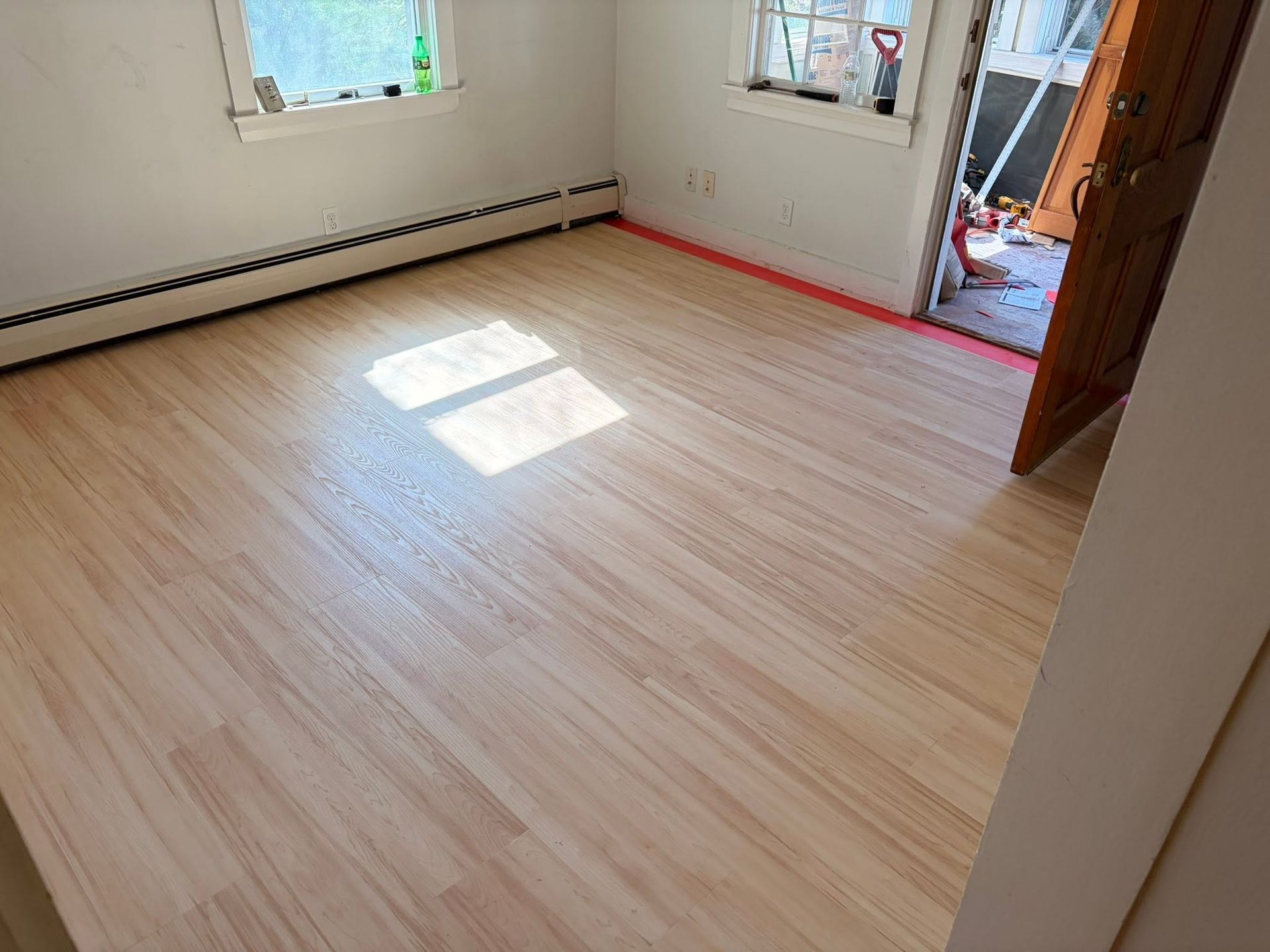
Upscale Renovations installs tile, vinyl, laminate, hardwood, and specialty flooring in Nashua with the same precision applied to finish carpentry—because the two disciplines share the same demand for flat, level, and dimensionally consistent substrates. Homeowners dealing with cupped boards, hollow spots under tile, or transitions that never quite closed correctly are the clients this work is designed for. Each installation begins with a subfloor assessment rather than a material order, because what goes underneath determines how long what goes on top will last.
The process at Upscale Renovations follows a defined sequence: subfloor inspection and correction, material selection matched to the room's conditions (hardwood requires acclimation time before installation to stabilize moisture content), then installation by method—glue-down, floating, or nail-down depending on material and substrate—followed by sealing or finishing, then trim and transitions. Older Nashua homes, particularly those built before the mid-1980s when subfloor standards shifted from boards to plywood panels, often have deflection or height variation that must be corrected before any finish material goes down. Skipping that step is the most common reason tile cracks within a year of installation.
Request a subfloor evaluation to identify what preparation your space requires before selecting a finish material.
How Subfloor Conditions Shape Every Flooring Decision
Material selection is not just an aesthetic decision—it is an engineering one. Solid hardwood cannot be installed below grade because moisture vapor from concrete slabs causes it to swell and buckle; engineered hardwood or luxury vinyl plank are the appropriate choices for basement-level or slab-on-grade installations. In wet areas like mudrooms or bathrooms, tile with a properly waterproofed substrate is the only material type that holds up without trapping moisture behind it. Upscale Renovations matches the material to the room's actual conditions rather than defaulting to whatever is most available.
After installation is complete, you will notice that transitions between rooms sit flush rather than creating a trip hazard, that the floor does not flex or sound hollow underfoot in high-traffic areas, and that base trim and threshold pieces close off gaps at walls and doorways cleanly. Those details—the ones that separate a finished-looking installation from one that looks installed—are where finish-carpentry experience applies directly to flooring work. Standalone flooring jobs in the $8,000 to $25,000 range move quickly through completion at Upscale Renovations, often finishing within days rather than weeks.
Moisture control in basements and wet areas adds steps that are not optional: vapor barriers, appropriate adhesives rated for high-humidity environments, and perimeter gaps that allow the material to expand without buckling. These are not upsells—they are the difference between a floor that lasts and one that fails before the next owner moves in.
What Property Owners Ask About Flooring Installation
The questions below focus on how flooring installation actually works—what happens at each stage, what conditions affect the approach, and what to look for once the work is finished.
What does subfloor preparation actually involve, and why does it matter?
Subfloor prep means correcting any deflection, squeaks, height variation, or moisture infiltration before finish material is laid; in Nashua homes built before 1985, diagonal board subfloors often require a layer of plywood underlayment to achieve the flat, rigid surface that tile and hardwood demand.
How does hardwood acclimation affect the installation timeline?
Solid hardwood must be stored inside the home at its installation conditions—temperature and ambient humidity—for several days before being fastened down, so that the wood reaches its equilibrium moisture content; installing before acclimation is complete causes the boards to expand or contract after fastening, which opens gaps or causes crowning.
What installation method is used for each flooring type?
Nail-down is standard for solid hardwood over plywood subfloors, glue-down is used for engineered wood and some luxury vinyl on concrete, and floating installation works for laminate and certain engineered products where adhesive or fasteners are not practical.
How do you identify whether existing flooring can be refinished versus replaced?
A solid hardwood floor can typically be sanded and refinished if the wear layer above the tongue is at least three-sixteenths of an inch thick; thinner boards, engineered products, and laminate cannot be sanded and require replacement when the surface layer is worn through.
What should be done differently in basement flooring installations?
Below-grade spaces require a vapor barrier between the concrete slab and the finish material, a material rated for moisture exposure, and a perimeter expansion gap—solid hardwood is not appropriate below grade regardless of barrier installation.
Upscale Renovations installs flooring as both a standalone service and as part of larger renovation projects, so the scope can be scoped to your timeline and budget. Upscale Renovations also installs flooring in Derry, Manchester, and surrounding New Hampshire and Massachusetts communities. Arrange an on-site consultation to review your subfloor condition and narrow down the material options that fit your space.